
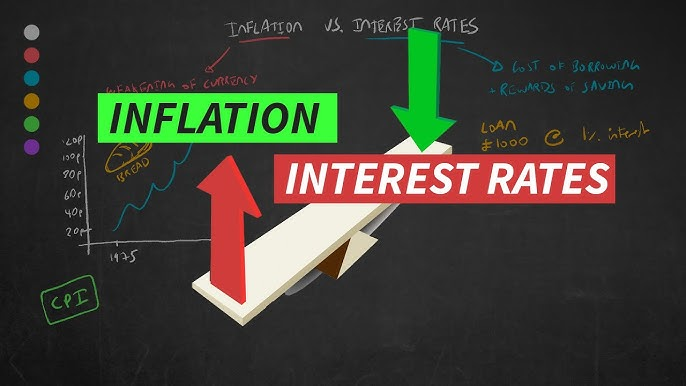
Interest rates were once the clearest signal in the economy. Today, they often confuse more than they clarify. High debt levels, central bank intervention, structural inflation, housing shortages, and global shifts have changed how rates impact growth, markets, and everyday finances. This article explains why interest rates no longer work like they once did—and how individuals and investors should adapt.
Introduction: When the Economy’s Most Important Signal Breaks Down
For decades, interest rates were the economy’s universal language.
Rising rates meant the economy was overheating.
Falling rates signaled trouble ahead.
Low rates encouraged borrowing and growth.
High rates slowed demand and cooled inflation.
This framework guided everything from central bank policy to household decisions about buying homes or saving money.
But over the past few years, something unsettling has happened.
Interest rates have risen faster than at any point in modern history—yet the economy hasn’t behaved as expected. Inflation has stayed stubborn. Housing prices haven’t collapsed. Financial markets have repeatedly rallied in environments that once guaranteed pain.
For millions of Americans, this disconnect feels personal:
- Mortgage rates jump, but home prices barely budge
- Savings rates rise, yet purchasing power still erodes
- Rate cuts are promised, but relief doesn’t arrive
The uncomfortable truth is this: interest rates no longer mean what they used to.
Understanding why is no longer optional. It’s essential for navigating today’s economy with clarity instead of confusion.
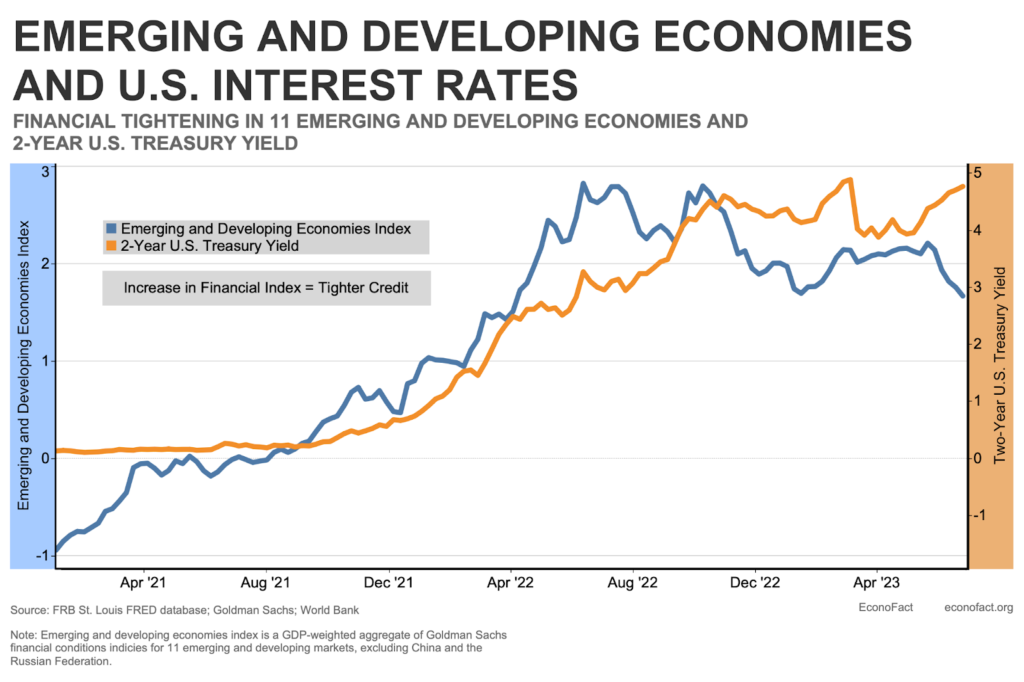
Why Interest Rates Used to Be So Powerful
To understand what changed, we first need to understand why interest rates once worked so well.
For much of the post-World War II era, the economic system was simpler and more responsive. Interest rates influenced behavior directly because:
- Debt levels were relatively low
- Labor markets were younger and growing
- Globalization kept prices down
- Central banks intervened sparingly
When rates rose, borrowing slowed quickly. When rates fell, spending and investment picked up. The economy responded predictably.
Interest rates functioned like a thermostat—adjusting economic temperature with reasonable precision.
That thermostat no longer works the same way.
The Debt Problem That Changed Everything
The most important reason interest rates lost their traditional power is debt.
Over the last few decades, debt has exploded across every sector:
- Governments
- Corporations
- Households
According to international financial data, global debt now exceeds 300% of global GDP, far above historical norms.
High debt fundamentally alters how interest rates work.
When debt is extreme:
- Even modest rate increases dramatically raise interest costs
- Governments become sensitive to borrowing expenses
- Central banks face pressure to avoid prolonged high rates
In this environment, interest rates are no longer a neutral economic tool. They become politically and fiscally constrained.
Rates can rise—but only so far, and often not for long.
Central Banks Are No Longer Independent Actors
In the past, central banks focused mainly on inflation and employment.
Today, they must juggle far more:
- Financial market stability
- Government debt sustainability
- Banking system health
- Political pressure and public reaction
Years of emergency interventions, quantitative easing, and asset purchases have conditioned markets to expect support.
As a result:
- Rate hikes don’t always cool markets
- Rate cuts don’t always stimulate growth
- Investor behavior responds more to central bank messaging than to actual rate levels
Interest rates now operate alongside expectations, narratives, and credibility, making their signals less clear.
The Housing Market: A Perfect Example of Broken Signals
Nothing illustrates this shift better than housing.
Historically:
- Mortgage rates rose → demand fell
- Home prices stagnated or declined
- Affordability eventually improved
Recently, that relationship broke down.
Mortgage rates surged to multi-decade highs, yet housing prices remained elevated in many regions. Why?
Because millions of homeowners locked in ultra-low rates years earlier and refused to sell. Supply stayed constrained. Demographic demand remained strong.
The result was a powerful lesson:
Interest rates matter less when structural forces dominate behavior.
Rates alone could not overcome supply shortages and past policy decisions.
Why Inflation No Longer Responds Predictably to Rate Hikes
Central banks once believed inflation could be controlled primarily through interest rates.
That assumption has weakened.
Modern inflation is increasingly driven by:
- Supply chain disruptions
- Energy and commodity shocks
- Labor shortages
- Demographic aging
- Geopolitical fragmentation
Raising interest rates does little to fix these issues.
Higher rates can reduce demand, but they don’t:
- Create workers
- Build factories
- Stabilize geopolitics
This is why inflation can remain stubborn even as rates rise aggressively—forcing policymakers into difficult trade-offs between growth and price stability.
Financial Markets Have Changed the Transmission Mechanism
Interest rates used to influence the economy through relatively simple channels.
Today’s financial system is:
- Faster
- More global
- Heavily automated
- Highly sensitive to liquidity
Institutional investors hedge rate changes instantly. Capital moves across borders in seconds. Asset prices respond as much to expectations as to reality.
This weakens the traditional “transmission mechanism” through which rates affected real-world decisions.
Rates still matter—but their effects are diluted, delayed, and sometimes distorted.
Why Rate Cuts No Longer Guarantee Relief
Many Americans still assume rate cuts automatically help the economy.
That assumption is outdated.
Rate cuts today may:
- Signal economic stress rather than opportunity
- Fail to lower borrowing costs if credit risk rises
- Encourage asset speculation without boosting wages
In uncertain environments, lenders may tighten standards even as rates fall. Consumers may hesitate to borrow regardless of cheaper credit.
This explains why rate cuts sometimes coincide with market anxiety instead of confidence.
Expectations Matter More Than Rate Levels
One of the biggest changes in modern markets is psychological.
Markets no longer react simply to rate levels. They react to:
- The pace of change
- Central bank tone
- Forward guidance
- Perceived policy mistakes
A small rate hike can trigger volatility if it signals stubbornness. A pause can spark rallies even if rates remain high.
Interest rates have become narrative-driven, not purely mathematical.
What This Means for Savers and Borrowers
For households, this new environment creates mixed signals.
Savers experience:
- Higher nominal yields
- Uncertain real returns after inflation
- Greater market volatility
Borrowers face:
- Higher headline rates
- Tighter lending standards
- Less predictable refinancing windows
The old playbook—waiting for rates to “fix” things—no longer works reliably.
Financial decisions now require broader context.
How Investors Are Adapting
Institutional investors adjusted earlier than most.
Instead of focusing solely on rate direction, they emphasize:
- Cash-flow durability
- Balance-sheet strength
- Pricing power
- Liquidity during stress
They understand that interest rates are now just one variable in a complex system, not a master control.
Practical Lessons for Everyday Americans
You don’t need to forecast interest rates perfectly—but you do need to stop relying on outdated assumptions.
Key takeaways:
- Don’t expect rates alone to restore affordability
- Focus on real returns, not headline yields
- Avoid over-leverage based on rate predictions
- Build flexibility into financial plans
- Watch structural forces, not just central bank headlines
Interest rates still matter—but they no longer tell the whole story.
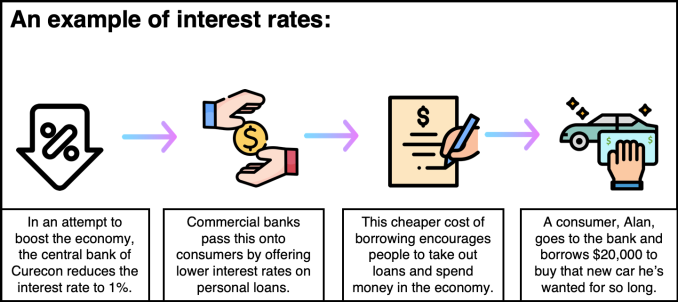
Frequently Asked Questions (SEO-Optimized)
1. Why don’t interest rates affect the economy like they used to?
High debt, central bank intervention, and structural forces have weakened traditional rate transmission.
2. Do higher interest rates still reduce inflation?
They can reduce demand, but modern inflation is often driven by supply and demographic factors.
3. Why hasn’t housing crashed despite high mortgage rates?
Low supply, locked-in homeowners, and demographic demand have outweighed rate pressure.
4. Are rate cuts still good for the economy?
Sometimes, but they can also signal stress and fail to stimulate borrowing.
5. Why do markets rally even when rates are high?
Expectations, liquidity, and future policy signals matter more than absolute rate levels.
6. Should savers celebrate higher interest rates?
Only cautiously—real returns depend on inflation and taxes.
7. Why are central banks constrained by debt?
High government debt makes prolonged high rates fiscally painful.
8. Are interest rates less important today?
They still matter, but they no longer dominate economic outcomes.
9. How should investors think about rates now?
As one input among many—not a standalone signal.
10. What’s the biggest mistake people make with interest rates?
Assuming historical relationships will automatically repeat.
Final Thoughts: The End of Simple Economic Signals
Interest rates were once the clearest signal in finance.
Today, they are a distorted echo—still meaningful, but incomplete.
Debt, demographics, globalization’s reversal, and policy intervention have reshaped the system. Those who cling to old assumptions risk misunderstanding the economy entirely.
The future belongs to those who understand not just where rates are going—but why they no longer mean what they used to.