The next Federal Reserve interest rate decision could trigger major volatility across the stock market as investors reassess valuations, borrowing costs, and recession risks. Shifts in rate expectations often move markets before the Fed acts, but a surprise hike or delayed cut could amplify sell-offs. Understanding how rate changes influence sectors, earnings, and consumer behavior is essential for protecting investment portfolios.
Why the Next Fed Rate Move Matters More Than Any in Recent Years
Few forces shape the US stock market as dramatically—or as suddenly—as a Federal Reserve interest rate decision. Even the possibility of a shift can rattle equities, but when the Fed finally acts, the ripple effect can hit every corner of the economy: from mortgage rates, consumer spending, and corporate earnings to tech valuations and retirement accounts.
In 2024–2025, markets have become unusually sensitive to rate signals. Investors know the Fed is trying to balance inflation control with economic stability, but what many underestimate is how one unexpected rate move—whether a hike or a delayed cut—could shake investor sentiment to its core.
Before the central bank announces its next step, Wall Street is already asking tough questions:
- Will the next rate move crash overvalued tech stocks?
- Will borrowing costs choke corporate expansion?
- Are consumer-driven companies about to enter an earnings recession?
- Could a rate cut spark a speculative rally—or a panic over economic weakness?
This article breaks down the real risks, backed by historical evidence and current market behavior, and explains how individuals can protect themselves from the coming volatility.
Because the Market Is Built on Rate Expectations—Not Reality
The stock market doesn’t wait for the Fed’s official announcement. It moves based on expectations.
For example:
- In 2022, tech stocks lost trillions in market value before the Fed executed the bulk of its rate hikes because investors priced in future tightening.
- In 2020, markets skyrocketed within moments of the Fed signaling aggressive rate cuts, even before they were fully implemented.
In other words, anticipation drives volatility, but surprises drive shocks.
Today, the market is unusually divided:
- Half believe rate cuts are overdue.
- Half fear inflation could tick up again, forcing a hike.
- Nearly everyone agrees: a surprise is possible.
That makes the environment fragile—one sharp move in rates could ignite either panic or euphoric speculation.
What Happens to Stocks When the Fed Raises or Cuts Rates?
A Rate Hike Typically Pushes Stocks Down—But Not Always
Historically, when borrowing becomes more expensive:
- Companies slow expansion
- Consumers reduce spending
- Profit margins shrink
- Investor risk appetite declines
Real-life example:
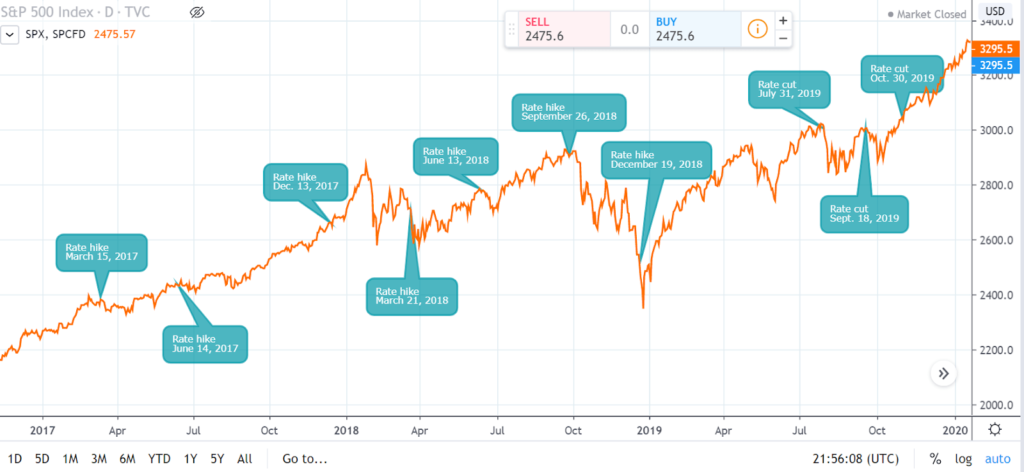
When the Fed raised rates in 2018, markets fell nearly 20% in Q4. Apple issued a rare revenue warning, citing weaker consumer demand partly tied to tightening financial conditions.
Rate Cuts Often Lift Stocks—But Can Trigger Fear Instead
Rate cuts are usually bullish because they lower financing costs. But they also send another message:
“The economy is slowing and may require emergency support.”
Real-life example:
In Q1 2020, the Fed cut rates to near zero—but markets still crashed because investors interpreted the move as a signal of imminent recession.
Moral:
It’s not the rate move itself. It’s what the move implies about economic health.
Which Fed Move Is Most Likely to Shake the Market to Its Core?
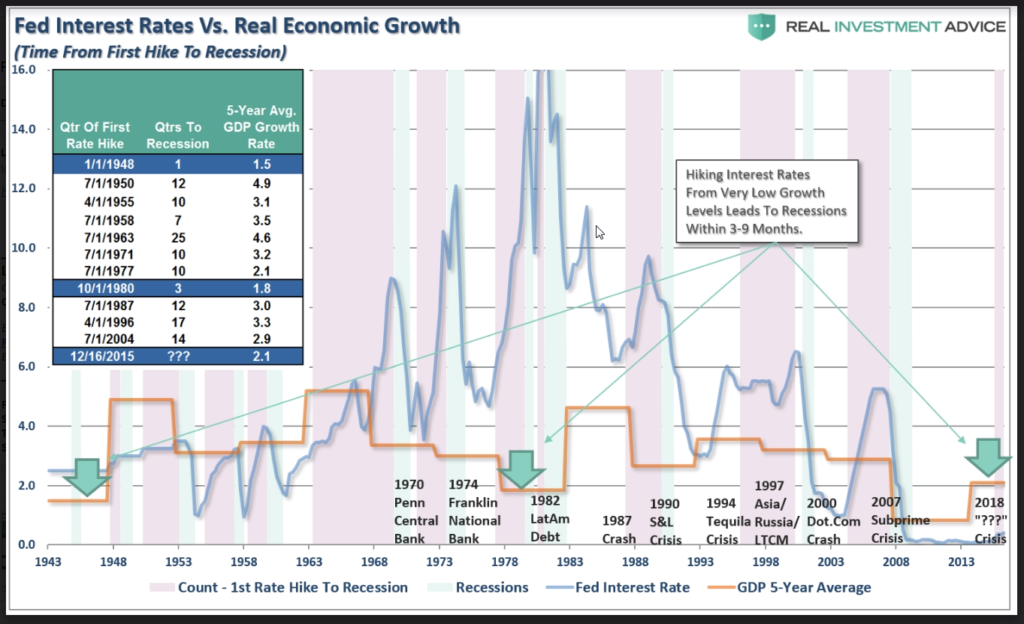
Investors fear the same scenario that crippled markets in previous tightening cycles:
A Rate Hike When the Market Expects a Cut
This is the nightmare scenario for stocks, especially in:
- Technology
- Consumer discretionary
- Real estate
- Banking
If the Fed unexpectedly hikes because inflation resurges, several things happen immediately:
- Bond yields spike → Stocks compete with safer returns.
- Borrowing costs jump → Corporations delay investments.
- Valuation models reset → High-growth stocks suffer most.
- Recession fears explode → Defensive sectors surge.
Real-life comparison:
In June 2000, the Fed raised rates unexpectedly at the tail end of the dot-com bubble. Within months, the NASDAQ collapsed more than 40%.
How Inflation Trends Could Force the Fed’s Hand
Even a small uptick in inflation can change the entire calculus:
- A rise in energy costs
- A surge in shelter inflation
- Consumer spending remaining hotter than expected
Any of these can push the Fed toward a more hawkish stance.
Fact: Approximately 80% of stock market valuations currently depend on the assumption that rates will fall, not rise.
If that assumption breaks, vulnerable sectors could correct sharply.
Real-Life Scenarios: What the Next Rate Move Could Trigger
Scenario 1: The Fed Raises Rates Unexpectedly
If inflation returns or wages rise too fast:
- Tech stocks could fall 15–25%
- Mortgage rates could rise above recent highs
- Financing for small businesses could dry up
- Bank loan defaults could rise
Investors may flee to:
- Utilities
- Healthcare
- Consumer staples
- Gold
- Short-term Treasuries
Scenario 2: The Fed Holds Rates Longer Than Expected
Even without a hike, delaying cuts can hurt markets because the market has already priced in cuts. No cuts = instant repricing.
Affected areas:
- Real estate investment trusts (REITs)
- Auto manufacturers
- Retailers
- Credit-sensitive companies
- Homebuilders
Scenario 3: The Fed Cuts Rates Early
Rate cuts seem bullish—but can cause panic if investors believe:
- A recession is arriving
- Corporate earnings could collapse
- Unemployment is rising
Historical lesson:
In 2007, the Fed cut rates aggressively—but markets still fell for over a year because recession fears overshadowed the benefit of lower borrowing costs.
Key Questions Investors Are Asking Right Now
- Will my 401(k) or IRA drop if the Fed raises rates?
Most retirement portfolios are heavily weighted toward equities that suffer during tightening cycles. A rate hike could temporarily lower account balances, especially in growth funds. - Will tech stocks crash?
High-growth companies rely on cheap capital. Higher rates shrink valuations quickly. FAANG stocks historically underperform during tightening cycles. - Should I shift into bonds?
Short-term Treasuries may become more attractive. But long-term bonds could fall if interest rates rise again. - Is now the time to hold more cash?
Cash becomes more valuable when markets are volatile and money markets yield 4–5%. - How can I hedge against volatility?
Diversify into defensive sectors, reduce exposure to high-P/E tech, and maintain a portion of cash-like instruments.
Practical Steps to Protect Yourself Before the Next Fed Move
- Diversify into defensive sectors – Healthcare, utilities, and consumer staples tend to outperform during tightening cycles.
- Reduce exposure to high-P/E tech – If valuations correct, expensive growth stocks fall the hardest.
- Shorten bond duration – Short-term bonds shield you from rapid rate increases.
- Hold more cash-like instruments – Money market funds and Treasury bills provide stability and yield.
- Avoid overleveraged companies – High debt becomes dangerous when borrowing costs rise.
- Rebalance your portfolio quarterly – Markets are too volatile to “set and forget” in 2025.
What History Teaches Us About Fed-Induced Market Shocks
Here are moments when a single Fed move changed everything:
- 1994: Surprise rate hikes caused one of the biggest bond market crashes in history.
- 2000: Tightening collided with the dot-com bubble and accelerated its collapse.
- 2007: Rate cuts signaled deeper economic stress and preceded a market crash.
- 2018: A late-year rate hike triggered a near-bear-market drop.
Pattern: When the Fed moves against investor expectations, markets react violently—every time.
The Next Fed Move Will Determine Whether 2025 Is a Rally Year or a Recession Year
The economy is at a tipping point:
- Corporate debt levels are high
- Consumer savings are shrinking
- Housing affordability is near record lows
- Market valuations are stretched
- Inflation, while lower, remains sticky
This is why the next rate move has unusual power. The stock market feels like a tower built on assumptions—and if the Fed knocks out one block, the entire structure could wobble.
Top 10 Trending FAQs About the Next Fed Rate Move
- What sectors will be hit hardest if interest rates rise?
Tech, real estate, financials with high-rate sensitivity, and consumer discretionary stocks. - Will a rate hike cause a stock market crash?
Not necessarily—but it increases volatility and can trigger major sell-offs if unexpected. - Should investors buy the dip after a Fed decision?
Only if fundamentals support long-term growth. A falling market may signal deeper economic issues. - Do interest rate cuts always boost stocks?
No. Cuts can also signal economic weakness or recession. - How quickly do markets react to rate changes?
Often instantly. Sometimes even before the announcement, based on expectations. - Why do tech stocks fall when rates rise?
Higher rates reduce the future value of earnings, making growth stocks less attractive. - What happens to gold if the Fed raises rates?
Gold may initially fall but often recovers as investors seek safe-haven assets. - Will mortgage rates rise again?
If the Fed hikes or delays cuts, mortgage rates could trend upward. - Should I adjust my retirement portfolio before the Fed meeting?
Consider reducing risk exposure if your portfolio is overweight in high-growth or rate-sensitive sectors. - What’s the safest investment during Fed uncertainty?
Short-term Treasuries, money market funds, and diversified defensive sectors. - How does the Fed communicate upcoming rate moves?
Through speeches, economic projections, FOMC statements, and press conferences.
Final Takeaway: Prepare, Don’t Predict
No one—not Wall Street, not economists, not AI—can predict the Fed’s next move with 100% certainty. But you can prepare for volatility, diversify intelligently, and avoid risky assumptions.
The market is already priced for perfection. If the Fed delivers anything less, the shock could be significant. Protect your portfolio, stay informed, and consider a measured approach rather than chasing speculative trends.